How Chicago’s Universities and Colleges have responded to the COVID-19 Pandemic
The COVID-19 pandemic has forced dramatic changes at Chicago’s universities and colleges, disrupting campuses and creating new challenges for students, faculty and staff as classes were moved to online and dorms were emptied. As AUC institutions responded to these challenges, they also unleashed their creative energies and resources to help their communities, support health workers on the front lines, and seek medical breakthroughs to fight the virus. (To keep up with our latest efforts please refer to our news section here.) Our current efforts include:
AUC Institutions Move Quickly to Protect Students, Faculty and Staff
When Governor J.B. Pritzker declared a State of Emergency in Illinois on March 11, 2020, America’s Urban Campus universities and colleges immediately responded by closing their campuses and moving to virtual education. In two weeks, taking advantage of spring break, the institutions worked with their faculties to design online courses so that students—all of whom had moved out of dorms and scattered across the country—could resume learning by early April.
In addition, the institutions’ staffs, almost all of whom had to work remotely under the state’s “stay-at-home” order, established remote student services, including advising, counseling, mentoring, and tutoring, and career services. Technology services offices worked overtime to support student, faculty, and staff information technology requirements, such as an “On-demand Concierge” for National Louis students or the computers and financial aid provided to Chicago State University students. The institutions established emergency funds for students needing financial assistance. They also continued to pay students and hourly workers. Those having residence halls refunded Spring room and board fees.
Collecting and Producing Personal Protective Equipment
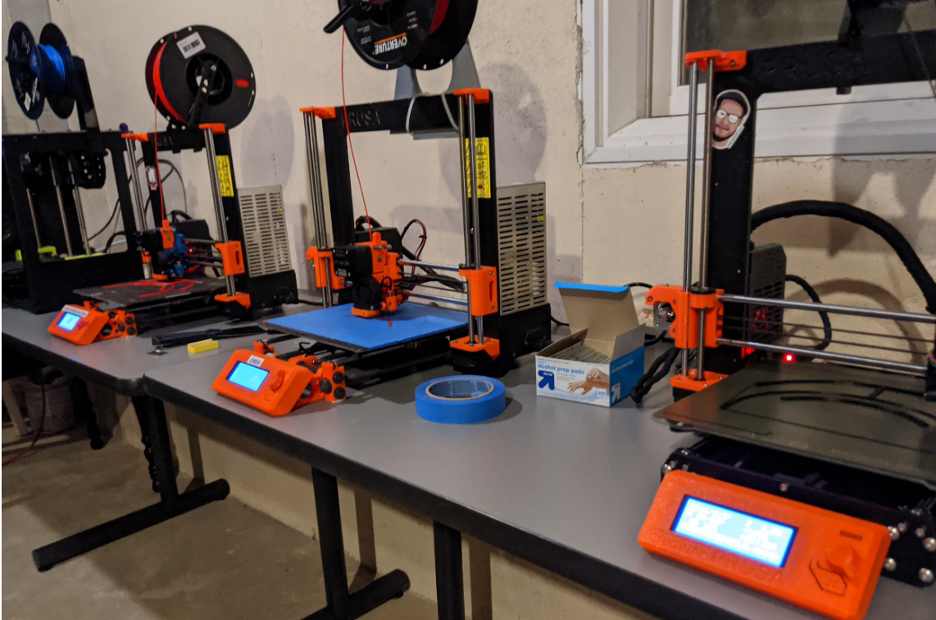
One of the most significant early issues our healthcare workers were facing at the start of the pandemic in Chicago was the severe shortage of PPE to keep them safe during their shifts. To combat this, universities have been very creative in their production and donations of PPE to local hospitals and healthcare facilities. Some schools made use of their 3D printers to create face shields and N95 masks. Others swept inventories of nursing classes, theater, and art studios to donate N95 masks. Students and faculty donated their time and materials to sew cloth surgical masks.
UIC Medical Students Graduate Early to Aid Hospitals Respond to the Surge
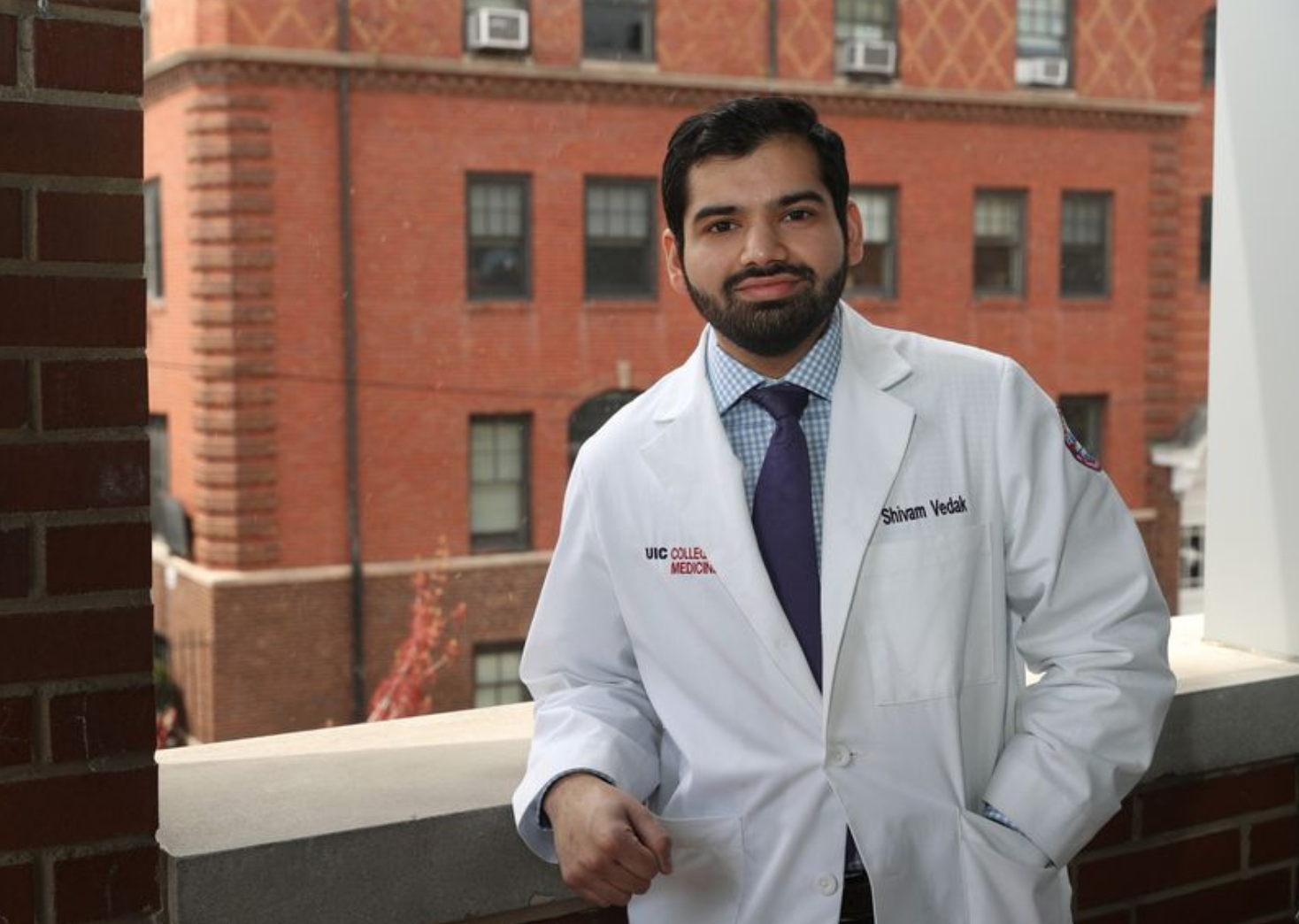
PPE is not the only shortage the healthcare system is experiencing right now; many hospitals and facilities are also facing a shortage of qualified employees. The University of Illinois College of Medicine responded to this issue by allowing 192 of its medical students to graduate early and enter the workforce. As medical professionals grow increasingly overworked, it is more important than ever to have these new graduates begin their residencies and support local hospitals in any way they can.
University of Chicago Commits Fund and Food to its Surrounding Neighborhoods
To provide emergency support and address some of the immediate needs of local residents, businesses, and community-based nonprofits on the city’s South Side, the University of Chicago launched a multifaceted COVID-19 Community Support Initiative. This effort includes using the University’s existing infrastructure and dining workers – many of whom are South Side residents – to safely prepare and, in partnership with the Greater Chicago Food Depository, distribute 225,000 meals to community members struggling to feed themselves and their families. Additionally, the University has awarded more than $680,000 in emergency bridge grants to 182 small businesses across its nine South Side neighborhood focus areas to cover general operating expenses and direct support for impacted employees while also bolstering the recovery of active commercial corridors. Other assistance provided through the initiative has included $157,000 in grants and $153,000 in rent relief to the University’s small business tenants and $400,000 in grants and organizational help to community-based nonprofits on the South Side. Support was mobilized as quickly as possible in order to help bridge the resource gap in this critical period as public and private sector COVID-19 aid becomes available.
AUC Universities and Their Medical Schools Lead the Search for Treatments and a Vaccine for COVID-19
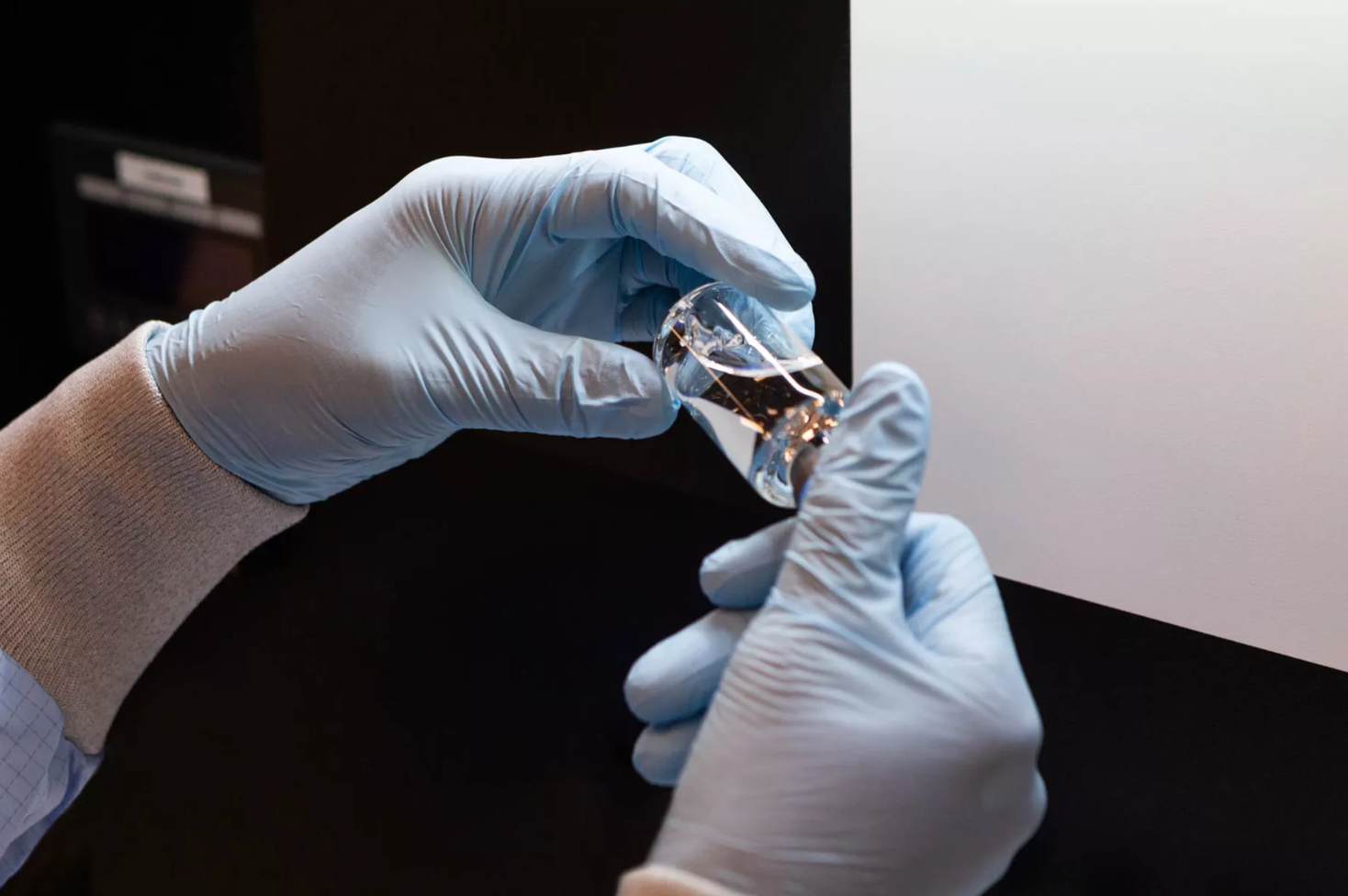
Researchers at the Northwestern University Feinberg School of Medicine, Rush University Medical Center, University of Illinois College of Medicine and the University of Chicago Pritzker School of Medicine have been active in exploring different approaches to addressing the mitigation of the Coronavirus pandemic, including (run cursor over each dot point to activate links):
- Clinical trials for various treatments, including the anti-viral medicine, Remdesivir (Rush University, UChicago, UIC), sarilumab drug study (UIC), and plasma transfusions (UChicago)
- New treatment for COVID-19 patients with severe breathing problems (Rush)
- Research into the molecular structure of the novel Coronavirus to develop a possible vaccine (UChicago, Northwestern)
- Self-sanitizing facemasks (Northwestern)
- Development of a rapid, inexpensive, mass-produced, simple-to-administer test for Coronavirus (Northwestern)
- University of Illinois at Chicago/UI Health is among the first institutions in the nation to participate in the Healthcare Worker Exposure Response and Outcomes Registry to understand health care worker experiences, track their health outcomes related to the pandemic, and give healthcare workers an opportunity to participate in clinical trials.
Scientists Use Predictive Modelling to Help Government Plan for Re-opening the Economy
A group of Ecologists from the University of Chicago has been leading an initiative to assist the state government in plotting the advance of the Coronavirus—to help government officials look into the future regarding when to begin to reduce restrictions on people and the economy. They and others at Northwestern University and the University of Illinois are using sophisticated mathematical modeling programs, fed with real-time data from the spread of the virus, to gain some understanding of what the future might hold.

Universities Support the State of Illinois in Producing COVID-19 Testing Materials
Illinois Institute of Technology (Illinois Tech), University of Illinois Chicago, University of Illinois Urbana Champaign, Southern Illinois University at Carbondale and private firms have been asked by the state to produce hundreds of thousands of vials of Virus Transport Medium (VTM) — a crucial testing material for COVID-19 — and make them available to the Illinois Department of Public Health to expand the pipeline for the critical materials needed for increased COVID-19 testing.
Schools collaborate with the mayor's office for Phase 4 Reopening, Fall 2020
The University of Chicago, the University of Illinois in Chicago, Northwestern University, Loyola University Chicago, National Louis University, and City Colleges of Chicago, along with America's Urban Campus were asked by the City of Chicago to form the Higher Education Working Group of the City's Reopening Task Force. The members helped review and draft Phase IV Reopening Guidelines for Higher Education. The schools' input helped the Mayor's Office and the Chicago Department of Public Health create guidelines that will allow Chicago Higher Education to continue giving the same high-quality education that it is known for, while also keeping students, faculty, and staff safe.
Cautiously reopening Chicago and Chicago universities and colleges rely on healthy interactions, safe spaces and conditions, and operational resilience and monitoring. The reopening will be a collaborative effort between the schools and students as everyone works hard to follow guidelines, sanitize their areas, socially distance themselves, and wear masks to protect themselves and others. Find more information on how higher education in Chicago will be different this fall here.